If you picture rural living as more space, quieter surroundings, and a stronger connection to the land, Central Saanich may already be on your radar. It offers a very specific kind of rural lifestyle, one shaped by active farmland, protected open space, and planning rules that are meant to keep it that way. If you are thinking about buying here, it helps to know what daily life, property use, and due diligence can really look like before you make an offer. Let’s dive in.
Rural living in Central Saanich
Central Saanich treats rural land as a long-term part of the community, not as future urban expansion. The district focuses most growth inside the Urban Containment Boundary, with Brentwood Bay and Saanichton functioning as compact service centres.
That matters because when you buy a rural property here, you are not just buying extra space. You are buying into an area where agriculture, low-density living, and the natural environment are expected to remain central features of the landscape.
The district says about 60% of its land base is in the Agricultural Land Reserve, or ALR. Its agriculture information also cites 152 farms and more than 2,679 acres of cropland, which shows how deeply farming is woven into everyday life in Central Saanich.
What “rural” can look like here
Not all rural properties in Central Saanich feel the same. The district distinguishes between Rural Forest, Rural Shoreline, and Rural Agriculture areas, and that can shape everything from site conditions to how you use the land.
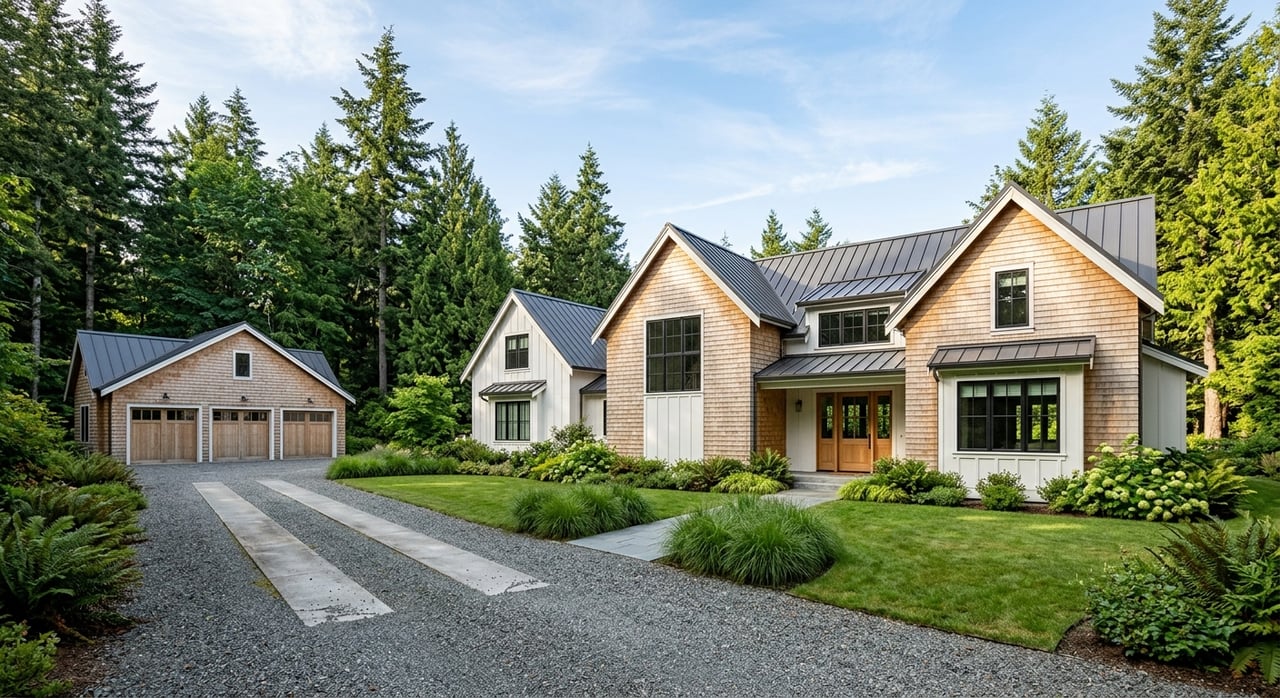
A Rural Forest property may involve more trees, slope, or a different building envelope than you expected. A Rural Shoreline parcel may come with marine exposure and shoreline-related considerations. A Rural Agriculture property may place you in the middle of an active farming area where agricultural use is the norm, not the exception.
This is one reason rural home searches benefit from a more detailed, property-by-property review. Two homes with the same acreage can come with very different constraints and opportunities.
Agriculture is part of daily life
In Central Saanich, rural living often means living beside working land. Farm fields, greenhouses, livestock, equestrian uses, and other farm-related activities are common parts of the local setting.
The district’s planning framework supports coexistence between residential and agricultural uses. In some cases, that includes buffers such as fencing, berms, landscaping, setbacks, or nuisance covenants where different uses meet.
For you as a buyer, the practical takeaway is simple: if you want rural living here, you should expect farming to be part of the environment. The district makes clear that normal farm practices are protected, and odour, noise, and dust can be expected in agricultural areas.
Permitted uses need close review
One of the biggest mistakes rural buyers can make is assuming that because a use exists on a property, it is automatically allowed or easy to expand. In Central Saanich, permitted uses depend on zoning, ALR status, and sometimes additional approvals.
Rural and agricultural parcels may support uses such as crops, livestock, greenhouses, farm retail, agri-tourism, wineries and cideries with conditions, and equestrian facilities. But that does not mean every property can do all of those things.
Much of Central Saanich’s agricultural land is zoned A-1 and sits within the ALR. The district states that agriculture is the priority use in the ALR, while non-agricultural uses are controlled and approvals may be needed for matters such as subdivision, non-farm use, or large residential buildings.
If you are considering a hobby farm, horses, a home-based agricultural use, or a property with existing outbuildings, it is worth confirming exactly what is permitted before you rely on future plans.
Subdivision is usually limited
Some buyers view acreage as a long-term land play. In Central Saanich, that approach needs caution.
The district discourages subdivision of rural lands and does not support further subdivision of agricultural lands to create new lots. It also says applications to exclude land from the ALR will not be supported by the district.
In plain terms, if you are buying with the hope of splitting the property later, you should treat that as a significant question mark unless you have very clear confirmation otherwise. Rural land here is generally intended to stay rural.
Accessory dwellings may be possible
If your goal is multigenerational living, guest space, or rental flexibility, some rural and agricultural properties may allow accessory housing. Recent district guidance notes that detached accessory dwellings may be allowed in some rural and agricultural zones.
That said, this is not universal. Lot size, current zoning, building permit requirements, and, for agricultural properties, possible development permit requirements can all affect what is feasible.
The district’s rural housing guidance also notes that septic systems may need upgrades. So even if a second dwelling appears possible on paper, the servicing side of the property can become a deciding factor.
Water and sewer are a major rural question
Services are one of the clearest differences between rural and urban property ownership in Central Saanich. The district provides municipal water and sewer services, but its planning states that these systems are generally not provided outside the Urban Containment Boundary.
If a property is outside a sewer collection area, owners can apply for inclusion, but council reviews those requests based on factors such as zoning, Official Community Plan designation, Island Health requirements, and proximity to sewer. Approval is not automatic.
The district also notes that some areas may not be able to support additional water connections for farm use. That is an important point if you are considering a property with agricultural ambitions.
Wells and septic need early due diligence
Private wells are common in rural settings. In British Columbia, private groundwater wells are not regulated under the Drinking Water Protection Act, and private well owners are responsible for ensuring their drinking water is safe.
The province also recommends registering wells in the GWELLS database, and non-domestic water use requires a water licence. If a property relies on a well, you will want clear information on the water source, registration status, and how the water is being used.
Onsite sewage systems are another common rural reality. Provincial rules require owners to maintain the system according to its maintenance plan, and many systems must be constructed or maintained by qualified authorized persons or engineers.
If you are hoping to add a suite, cottage, or carriage-style dwelling, septic capacity should be one of your first questions. It can affect both cost and feasibility.
Rural upkeep is more hands-on
A rural property can offer privacy and room to breathe, but it can also come with more owner responsibility. Central Saanich specifically points to issues such as ditch clearing, drainage, wildlife control, invasive species removal, and stormwater management around agricultural lands.
Road standards can feel different too. The district says rural roads outside the Urban Containment Boundary are intended to remain at rural standards, and municipal infrastructure in rural areas is kept at a lower level to avoid sprawl and retain rural character.
For many buyers, that is part of the appeal. Still, it is smart to go in with realistic expectations about maintenance, access, and seasonal property care.
Lifestyle tradeoffs to expect
The biggest draw of rural Central Saanich is the setting itself. The district highlights expansive rural landscapes, farmland, shoreline viewpoints, natural habitat, trails, and access to local food.
If that sounds like your ideal pace of life, the area can feel deeply rewarding. You may get more land, more openness, and a stronger sense of connection to the local environment than you would in a denser setting.
The tradeoff is convenience. Because Brentwood Bay, Saanichton, and the Keating Business District contain most of the district’s retail and service businesses, rural living usually means being more car-dependent and planning errands more intentionally.
Farm tax status can affect ownership costs
Some rural buyers assume a property advertised as a farm will automatically receive farm tax treatment. That is not how it works.
BC Assessment states that farm class applies only when land produces qualifying agricultural products for sale and meets income thresholds. A parcel can also be split-classified for different uses, and farm classification can be removed if requirements are no longer maintained.
If tax treatment is part of your purchase decision, make sure you verify the current classification and what is required to keep it.
A smart buyer checklist
When you are evaluating a rural property in Central Saanich, it helps to slow the process down and verify the basics early. A good checklist includes:
- ALR status
- Exact zoning
- Permitted uses
- Water source
- Sewer or septic status
- Well registration
- Farm-class status
- Subdivision limits
- Whether an accessory dwelling or farm-related use needs extra permits or covenants
These details can shape not just your purchase decision, but also how happy you will be with the property over time.
Why local guidance matters
Rural properties often look simple from the road and become more complex once you dig into zoning, servicing, and future use. That does not mean they are risky by default. It just means the right fit depends on matching your goals with the property’s actual rules and infrastructure.
If you are considering rural living in Central Saanich, it helps to work with someone who understands how acreage, ALR land, accessory housing questions, and lifestyle tradeoffs play out in Greater Victoria. A thoughtful review upfront can save you time, money, and stress later.
If you want help comparing rural properties or narrowing in on the right fit for your lifestyle, connect with Kash Burley for clear, local guidance.
FAQs
What should buyers know about ALR land in Central Saanich?
- Many rural and agricultural properties are in the ALR, where agriculture is the priority use and non-agricultural uses are controlled. You should confirm permitted uses, approvals, and restrictions before buying.
Can buyers add a suite or cottage on a rural Central Saanich property?
- Sometimes, but it depends on the zone, lot size, permit requirements, and in some cases septic capacity or development permit requirements on agricultural land.
Can buyers subdivide rural land in Central Saanich later?
- Often, subdivision potential is limited. The district discourages subdivision of rural lands and does not support further subdivision of agricultural lands to create new lots.
What utilities do rural buyers often deal with in Central Saanich?
- Rural properties may rely on private wells and onsite sewage systems because municipal water and sewer are generally not provided outside the Urban Containment Boundary.
What daily lifestyle changes come with rural living in Central Saanich?
- You can expect more open space and stronger agricultural surroundings, but also more driving, lighter municipal infrastructure, and more hands-on property maintenance.
Can buyers keep horses or run hobby-farm activities in Central Saanich?
- Often yes in principle, but the exact answer depends on the property’s zoning, ALR rules, and any required site-specific approvals.