Selling an acreage or estate in North Saanich is rarely just about the house. Buyers are often looking at the land, the outbuildings, the services, and the rules that shape what the property can legally support. If you want a smoother sale and fewer surprises, it helps to prepare for those questions before your home hits the market. Let’s dive in.
Why North Saanich estate sales differ
In North Saanich, land use can be just as important as square footage or finishes. The District says nearly 35% of the municipality is in the Agricultural Land Reserve, and the Official Community Plan adopted on July 14, 2025 identifies ALR land, environmentally sensitive areas, and Development Permit Areas for marine uplands and foreshore, creeks and wetlands, sensitive ecosystems, and steep slopes.
That means buyers often want more than a beautiful brochure. They may ask what uses are permitted, whether structures were properly authorized, and whether any part of the property is affected by ALR or environmentally sensitive area rules.
Start with property records
One of the best first steps is gathering your municipal records early. North Saanich has a formal property-information request process for owners and authorized agents or REALTORS®, and the District says requests can take 10 to 15 days.
As of January 1, 2026, the Property File Review fee is $75 plus GST. The file may include current zoning and permitted uses, active or historical building permit information, outstanding bylaw violations or Orders to Comply, occupancy-permit status, municipal service records, and survey certificates if available.
This step can help you catch issues while there is still time to respond calmly. It can also make it easier to answer buyer questions with confidence.
Use the GIS tool early
North Saanich also encourages owners to use its GIS tool to search an address and confirm permitted uses under the zoning bylaw. This is a useful first-pass check before you dig deeper with planning or listing preparation.
For larger properties, even a basic zoning review can shape how the home is marketed. It can also help prevent overpromising around future use.
Confirm zoning, ALR, and permit status
If your parcel is in the ALR, buyer questions may become more detailed. The Agricultural Land Commission says ALR land cannot be subdivided unless the subdivision is specifically allowed by the Commission or permitted under regulation, and local minimum parcel sizes do not guarantee approval.
The ALC also says title notations are not a definitive way to confirm ALR status. Current mapping should be checked instead.
North Saanich’s subdivision page says a proposed subdivision that complies with current zoning is submitted to the District’s Approving Officer. Still, if the parcel is in the ALR, provincial rules remain part of the conversation.
Don’t assume future potential
Acreage buyers often think ahead. They may ask about subdivision, an additional residence, a guest cottage, a suite, or a replacement dwelling.
In the ALR, the ALC says most properties are limited to one principal residence, with one additional residence allowed only under specific conditions. The Commission also limits some replacement-dwelling scenarios and short-term accommodation use.
That is why it is wise to be careful with marketing language. If a future use would require buyer verification or approvals, it is better to present that clearly than to frame it as guaranteed potential.
Review outbuildings and secondary spaces
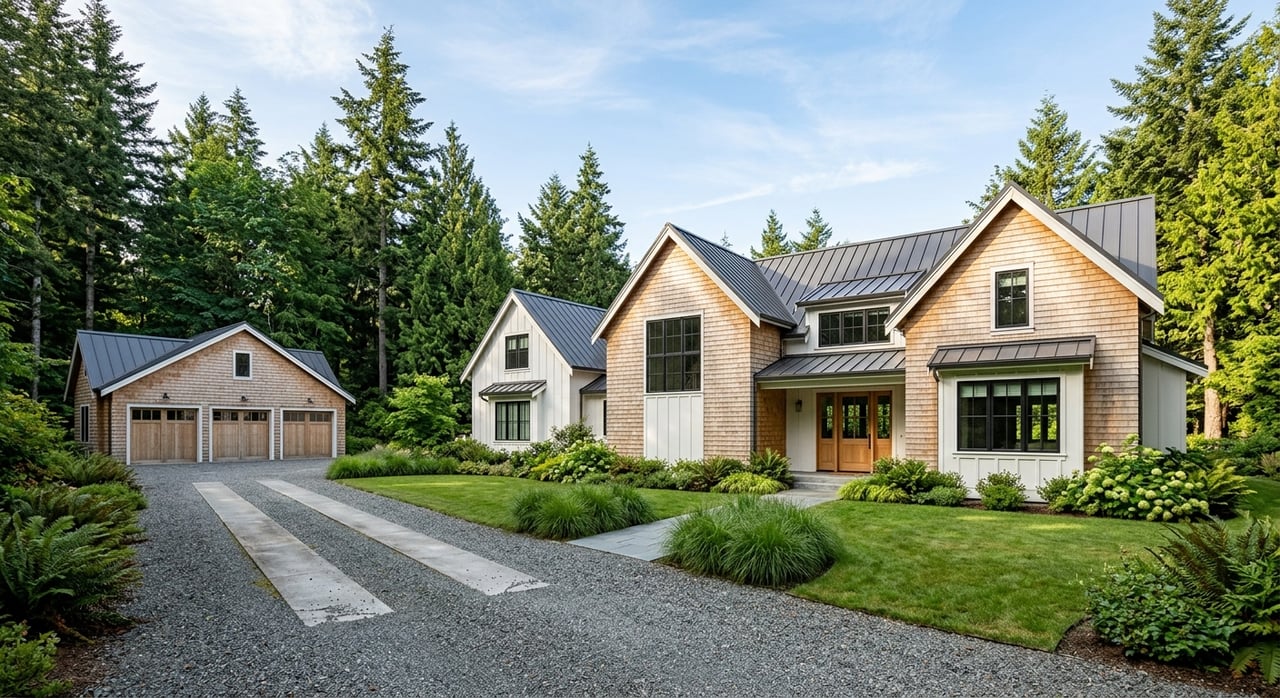
On an acreage or estate property, outbuildings often add value and appeal. A shop, barn, studio, guest cottage, or suite can be a major selling feature, but only if the use is presented accurately.
North Saanich’s zoning bylaw says accessory buildings and structures are only permitted when the principal use is established or being built under a valid permit. It also says they generally cannot contain a dwelling unit or be used for habitation unless the zone allows a guest cottage, caretaker’s unit, or farm-worker housing.
Guest cottages and suites have rules
Guest cottages are only permitted on parcels larger than 0.4 hectares. North Saanich also says either the cottage or the principal dwelling must be owner-occupied, and the cottage cannot be legally stratified separately from the principal dwelling.
For secondary suites, the District says every owner of a single-family dwelling that contains or is about to contain a secondary suite must hold a valid secondary-suite permit. It also says a building permit is required for a secondary suite or guest cottage.
In most zones, a secondary suite cannot exceed 90 square metres. The principal dwelling must be connected to municipal sewer or served by a compliant onsite sewage system, and one additional off-street parking space is required.
If you have a suite, cottage, or converted space, now is the time to confirm permits, inspections, and lawful use. Missing or unclear permit history can become a disclosure issue later.
Gather well and septic information
For many rural and estate properties, water and sewage documentation matters just as much as finish quality. The Province of British Columbia says sellers should gather well records, water-quality test results, pumping or flow-test results, and information about whether any wells on the property have been closed.
The Province also notes that mortgage providers may ask for some of this information. Having it ready can save time once a buyer is serious.
On properties with onsite sewage systems, the Province says these systems are regulated under the Public Health Act. Local environmental health officers may investigate if a system is suspected of affecting drinking water or creating a health hazard.
What to pull together
Before listing, it helps to create a simple property file with:
- Well records
- Water-quality test results
- Pumping or flow-test results
- Septic or onsite sewage documentation
- Building permits and final inspections
- Survey certificates if available
- Municipal property-file information
- Notes on easements, rights-of-way, or covenants
A well-organized file makes your property easier to understand. It also signals to buyers that the sale is being handled with care.
Prepare a clear site plan
On a larger parcel, buyers need help understanding how the property functions. North Saanich’s building-permit package shows that site plans can require lot dimensions, rights-of-way, easements, building and driveway locations, grades, parking, and the locations of water lines, wells, and septic fields.
That is one reason acreage marketing should go beyond interior photos. A clear site plan and a structure inventory can give buyers a better picture of the property as a whole.
Show the land, not just the living room
For in-town homes, buyers often focus on layout and updates. For acreage and estate properties, they also want to understand access, usable land, service locations, and how structures relate to one another.
Aerial photography, a site plan, and a clean summary of each structure can be especially useful in North Saanich. This is particularly true when a property includes multiple outbuildings, waterfront features, or a mix of open and sensitive land.
Watch for shoreline and sensitive-area issues
Some North Saanich properties have added complexity because of location. The OCP identifies Development Permit Areas for marine uplands and foreshore, creeks and wetlands, sensitive ecosystems, and steep slopes.
North Saanich’s zoning page also says development permits are required within the Development Permit Areas identified in the OCP, and staff should be contacted before plan submission because guidelines may affect siting or design.
If your property is waterfront or near a creek, wetland, or steep slope, buyers may want more clarity on what those designations mean. Careful, accurate marketing can help avoid confusion.
Be thoughtful with disclosures
British Columbia does not have prescribed forms for disclosing property information, according to BCFSA. Still, the authority says a property disclosure statement is a common voluntary tool, and accurate, complete disclosure is best practice.
BCFSA also says withholding known material latent defects can create legal risk. Known issues such as missing permits, water problems, structural damage, or unpermitted electrical or gas work can qualify as material latent defects.
Honest preparation helps marketability
Sellers sometimes worry that disclosing issues will hurt the sale. In reality, clear and accurate information often improves marketability because buyers know what they are evaluating.
If there is an issue, it is usually better to understand it early and decide how to address it. That gives you more control over timing, pricing, and negotiation.
Questions buyers will likely ask
Before your acreage or estate goes live, try to have answers ready for the questions that come up most often:
- What is the current zoning?
- Is any part of the parcel in the ALR?
- Are all outbuildings, suites, and cottages permitted and finaled?
- Do you have well records, water-quality tests, and septic documentation?
- Are there easements, rights-of-way, covenants, or survey issues affecting access or buildability?
- Would a buyer need to confirm subdivision potential, development permits, or other approvals before relying on future plans?
When you can answer these questions early, the sale often feels more organized and less stressful. That can make a meaningful difference in both buyer confidence and transaction flow.
Preparing an acreage or estate in North Saanich takes more than decluttering and great photos. It takes a thoughtful review of the land, the structures, the records, and the rules that shape the property. With the right preparation, you can present your home clearly, reduce surprises, and move into the selling process with more confidence.
If you are getting ready to sell and want hands-on guidance tailored to your property, Kash Burley can help you build a clear strategy from records and pricing to presentation and launch.
FAQs
What records should you gather before selling an acreage in North Saanich?
- Start with municipal property-file records, building permits, final inspections, survey certificates if available, well records, water test results, septic documentation, and notes on easements or rights-of-way.
Why does ALR status matter when selling a North Saanich estate property?
- ALR status can affect subdivision, housing, and land-use questions, so buyers often want to confirm whether any part of the parcel falls within the Agricultural Land Reserve.
Do guest cottages and secondary suites need permits in North Saanich?
- Yes. North Saanich says a building permit is required for a guest cottage or secondary suite, and owners of single-family dwellings with a secondary suite must hold a valid secondary-suite permit.
What do buyers want to know about wells and septic systems on rural properties?
- Buyers often want well records, water-quality results, pumping or flow-test information, and available septic or onsite sewage documentation.
How is marketing an acreage different from marketing a typical house lot?
- Acreage marketing usually needs to explain the land layout, outbuildings, services, access, and any planning or environmental factors, not just the home’s interior features.
When should you request property information from the District of North Saanich?
- Early. The District says property-information requests can take 10 to 15 days, so ordering records before listing can help you prepare for buyer due diligence.