Are you wondering whether a condo in Sidney could make daily life simpler without giving up the things you love? Downsizing is rarely just about square footage. It is about lifestyle, comfort, and choosing a home that fits the way you want to live next. If Sidney is on your radar, this guide will help you think through what condo living here really looks like. Let’s dive in.
Why Sidney attracts downsizers
Sidney offers a mix of convenience and coastal lifestyle that appeals to many buyers who want to simplify. The town’s downtown area serves as the commercial centre and regional service centre for the northern Saanich Peninsula, with a strong mix of retail, professional services, health care, restaurants, and personal services. That means many day-to-day needs can be handled close to home.
The setting also matters. Sidney is known for its waterfront, parks, beachfront access, trails, greenspace, and bird sanctuary, all of which help shape the town’s character. If your goal is to trade yard work and home maintenance for more time outdoors, Sidney has a lot working in its favor.
The Town’s planning documents also show a clear focus on walkability and accessibility. Sidney is working toward more comfortable public spaces, stronger active transportation connections, and better waterfront access. The Town’s Accessibility Plan adds 35 initiatives across transportation, public spaces, buildings, infrastructure, and municipal services, which is helpful context if you are planning for long-term ease of living.
What Sidney condos usually look like
If you are picturing a skyline of tall condo towers, Sidney may feel different than expected. The Town’s planning approach supports compact, pedestrian-friendly development with an emphasis on smaller-scale form. In the downtown area, policies aim to preserve a small-scale streetscape, keep retail facing the street, and place parking underground where feasible.
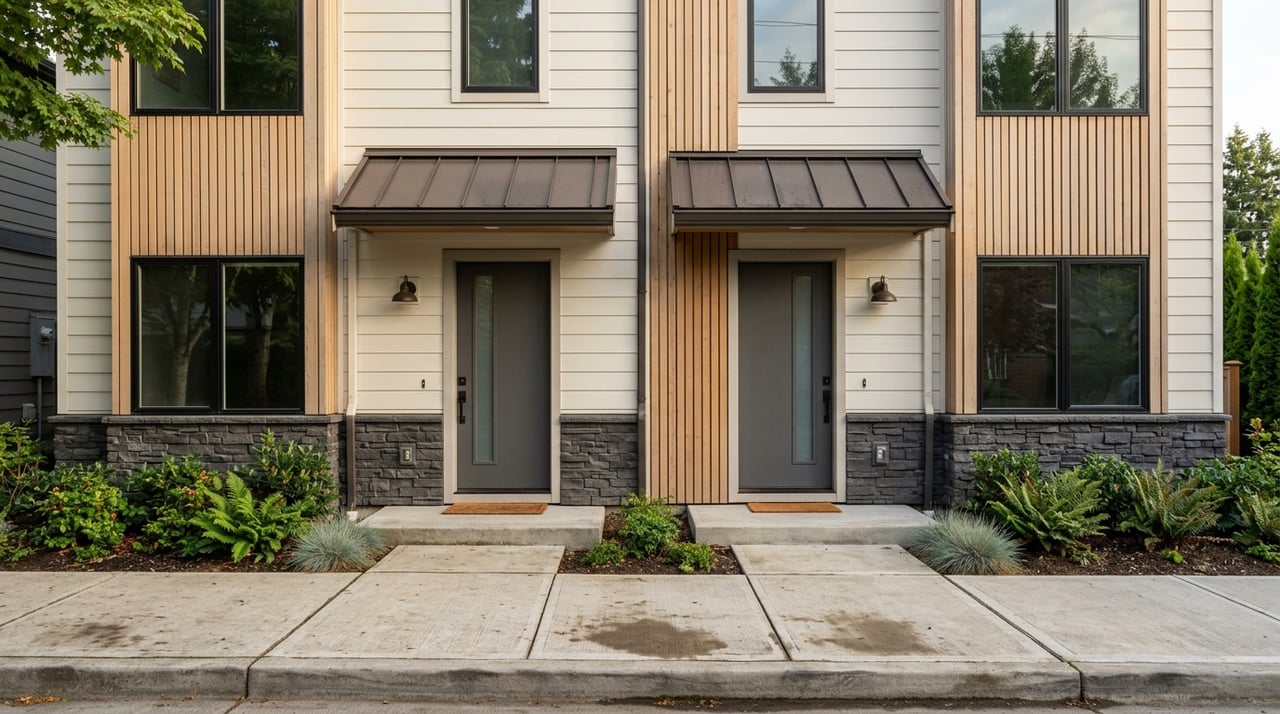
In practical terms, that often means low-rise and mid-rise condo buildings, mixed-use buildings with homes above shops, and smaller multi-unit developments. Current development applications in town reflect that pattern, including four-storey and five-storey residential proposals as well as smaller multi-unit projects.
That building style can be a good fit for downsizers who want easier living without the feel of a large tower community. Many buyers find this format more approachable, especially if they want a home base that feels connected to the street, local services, and the waterfront.
Why location matters in Sidney
Not every condo setting in Sidney will feel the same. The Town’s planning framework describes several distinct areas, and each one can shape your day-to-day experience.
The downtown waterfront area is envisioned as a maritime village setting, with marine-oriented businesses, cultural uses, restaurants, cafes, shops, and public spaces. That can be a great match if you want energy, activity, and easy access to the shoreline.
Other areas have a different feel. West Sidney Mixed Use Village is planned as a mixed-use area with ground-floor light-industrial or high-tech uses and homes or live-work units above. Harbour Road is considered a marine-industrial transition area, where residential uses need to work alongside marine and commercial activity.
For you as a buyer, this means one of the biggest questions is not just which condo, but which part of Sidney. Some homes will suit a quieter routine, while others may place you in a busier mixed-use setting with more commercial activity nearby.
Daily life without a big house
For many downsizers, one of the biggest benefits of condo living is the chance to rely less on the car. Sidney’s downtown and waterfront support that kind of lifestyle well. The waterfront walkway is about 2.5 kilometers long and includes benches, picnic tables, ocean views, and direct connections to cafes, restaurants, and shops near Beacon Avenue.
Errands are also concentrated near the core. Beacon Avenue includes a mix of specialty and family-owned shops, while grocery and service anchors in Sidney include Thriftys, Fairway Market, Save-On-Foods, Shoppers Drug Mart, and Home Hardware. The town core also includes doctors, dental clinics, and optometrists, with nearby extended care facilities noted in the Town’s economic strategy.
That kind of access can make a real difference when you are downsizing. Instead of managing a larger property and driving for every task, you may be able to build a simpler routine with more essentials close at hand.
Transit and parking to think about
Even if you still drive, it helps to know what your alternatives look like. BC Transit routes connect Sidney with Swartz Bay, the airport, and greater Victoria. Current airport service includes routes 87 and 88, and route 81 connects Brentwood, Saanichton, Sidney, and Swartz Bay.
This can be useful if you want flexibility for appointments, outings, or travel connections without relying on your car every time. The Sidney and North Saanich branch of the Vancouver Island Regional Library is also wheelchair accessible, offers free Wi-Fi, and is located on a BC Transit route.
Parking still deserves close attention when buying a condo. Sidney has seven public parking lots with 371 spaces, while on-street parking is generally time-limited to one, two, three, or 24 hours. The Town also offers some long-term pay parking and monthly or annual passes, but you should not assume public parking will solve a building’s storage or vehicle needs.
How strata living changes ownership
A condo purchase in British Columbia is different from owning a detached house. In a strata, you own your individual strata lot and share ownership of the common property and common assets with other owners through the strata corporation. In many condo buildings, common property includes hallways, elevators, recreational spaces, and the building exterior, including the roof.
This matters because your responsibilities shift. You are no longer maintaining a standalone house and yard on your own, but you are sharing decisions and costs with other owners. That can reduce personal maintenance, but it also means understanding how the building is run.
Strata fees are a big part of that picture. Owners approve the annual budget and strata fees at the annual general meeting, and those fees support common expenses through the operating fund and the contingency reserve fund. The operating fund usually covers items like utilities, landscaping, cleaning, minor maintenance, management, and annual insurance, while the contingency reserve fund helps pay for larger future work.
What to review before you buy
When you are downsizing, the right paperwork can tell you a lot about how smooth condo living may be. In B.C., the Province recommends reviewing:
- The strata plan
- Bylaws and rules
- Meeting minutes
- Financial statements
- Repair and maintenance records
- The Form B information certificate
- The depreciation report, where applicable
These documents help you understand the building beyond the listing photos. You can see how the strata manages money, what repairs have come up, whether there are usage restrictions, and how the corporation is planning for future work.
The Form B is especially useful because it is commonly requested by buyers and includes a summary of insurance coverage. The depreciation report also matters, since strata corporations with five or more lots are required in B.C. to obtain depreciation reports on a five-year cycle, helping owners plan for repairs and replacements over a 30-year timeframe.
Verify parking and storage details
One of the easiest mistakes buyers make is assuming parking and storage are straightforward. In strata properties, a parking stall or storage locker may be a separate strata lot, limited common property, or common property. That legal designation affects how those spaces are assigned and used.
Before you remove conditions, make sure you confirm exactly what comes with the unit. If parking is important to you, this step is especially important in a walkable town core where public parking rules may not work as a backup plan for everyday use.
Think about aging in place
If this move is meant to simplify life for the long term, look at the building through that lens. Features like elevator access, secure entry, visitor parking, and mobility-friendly design can become much more important over time.
Sidney’s local accessibility planning shows that these issues are a growing priority in the community. Even if you do not need those features today, it is smart to think ahead when choosing a condo that may serve you well for years.
Waterfront condos need extra questions
Sidney’s waterfront is a major draw, but near-water homes deserve closer review. The Town is actively planning for sea-level rise and notes that the first 30 metres inland from the shoreline is considered a wave-effect zone during storms. Its interim flood construction policy also requires engineering review for habitation or business uses below 5.0 m geodetic elevation.
For you as a buyer, that means the waterfront lifestyle should come with careful due diligence. Ask how the building handles flood exposure, lower-level parking, and below-grade storage. The Town also notes that ancillary storage areas below the flood construction level can be vulnerable to flood damage.
This does not mean waterfront condos should be avoided. It simply means each building should be evaluated on its own design, elevation, and approach to shoreline conditions.
Is a Sidney condo the right next move?
Downsizing to a condo in Sidney can offer a lot: less home upkeep, a walkable town core, access to services, and a coastal setting that supports an active and connected lifestyle. At the same time, the right fit depends on details like location, building style, strata health, parking, storage, accessibility, and waterfront conditions.
If you are comparing the ease of condo living against the tradeoffs of strata ownership, a local, building-specific approach matters. The best decision usually comes from matching your daily routine and long-term goals with the realities of a specific property, not just the general idea of downsizing.
If you are thinking about downsizing in Sidney and want practical, personalized guidance, Kash Burley can help you compare options, understand strata details, and find a home that supports the lifestyle you want next.
FAQs
What makes Sidney appealing for condo downsizers?
- Sidney offers a walkable town core, waterfront access, parks, trails, shops, grocery stores, health services, and transit connections that can support a simpler daily routine.
What types of condo buildings are common in Sidney?
- Sidney’s planning approach supports low-rise and mid-rise buildings, mixed-use buildings with homes above shops, and smaller multi-unit developments more than tower-style high-rises.
What should you review before buying a Sidney condo?
- You should review the strata plan, bylaws, rules, meeting minutes, financial statements, repair and maintenance records, Form B, and depreciation report where applicable.
Why do parking and storage need extra review in a Sidney strata?
- Parking stalls and storage lockers may be separate strata lots, limited common property, or common property, so you should confirm their legal designation rather than assume they are included in the way you expect.
What should you ask about waterfront condos in Sidney?
- Ask about building elevation, flood exposure, lower-level parking, below-grade storage, and how the building addresses shoreline and sea-level-rise considerations.