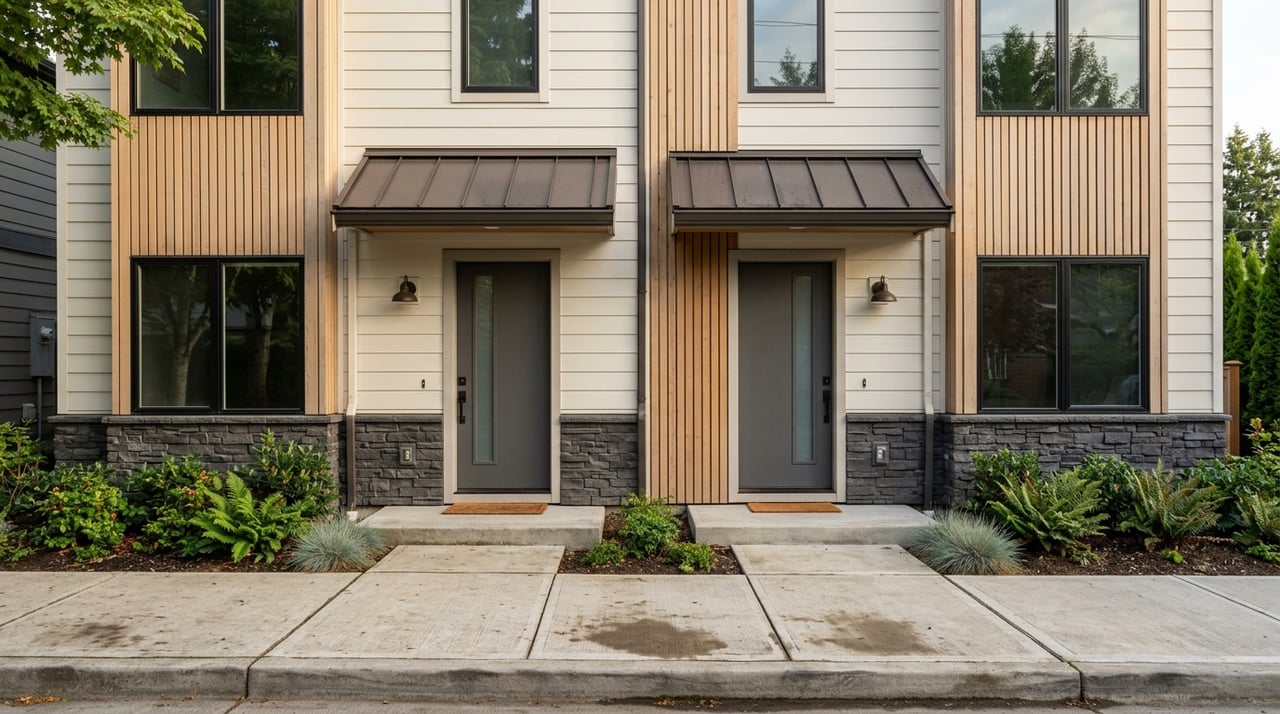
If you are choosing between a single-family home and a townhome in Langford, the biggest question is not always the style of home. In this market, the more important question is often how the property is titled, maintained, and governed over time. That can feel like a lot to sort through, especially when you are trying to balance budget, space, and day-to-day lifestyle. This guide will help you compare your options in a clear, practical way so you can move forward with confidence. Let’s dive in.
Why This Choice Matters in Langford
Langford is not a market where attached housing sits on the sidelines. In the 2021 Census, the city had 46,584 residents and 19,050 occupied private dwellings, with only 35.1% of homes classified as single-detached. That means a large share of the local housing mix already includes attached and ground-oriented options.
For buyers, that matters because townhomes, duplex-style homes, and other attached forms are a normal part of the market here. Langford’s 2025 Official Community Plan also supports population growth, densification in the right locations, and more mid-rise and ground-oriented housing choices. In plain terms, you are shopping in a city where both detached and attached homes play an important role.
Start With Title, Not Appearance
One of the most important things to know in British Columbia is that you cannot always tell how a property works just by looking at it. A home that looks like a detached house might still be part of a bare land strata. A townhouse or duplex might be strata-titled, or it might not be.
That legal structure affects your monthly costs, repair responsibilities, insurance details, and ability to make changes. In Langford, where the city’s zoning and planning framework include one- and two-family residential, residential townhouse, and low-density attached housing zones, that distinction comes up often.
What a Single-Family Home Can Mean
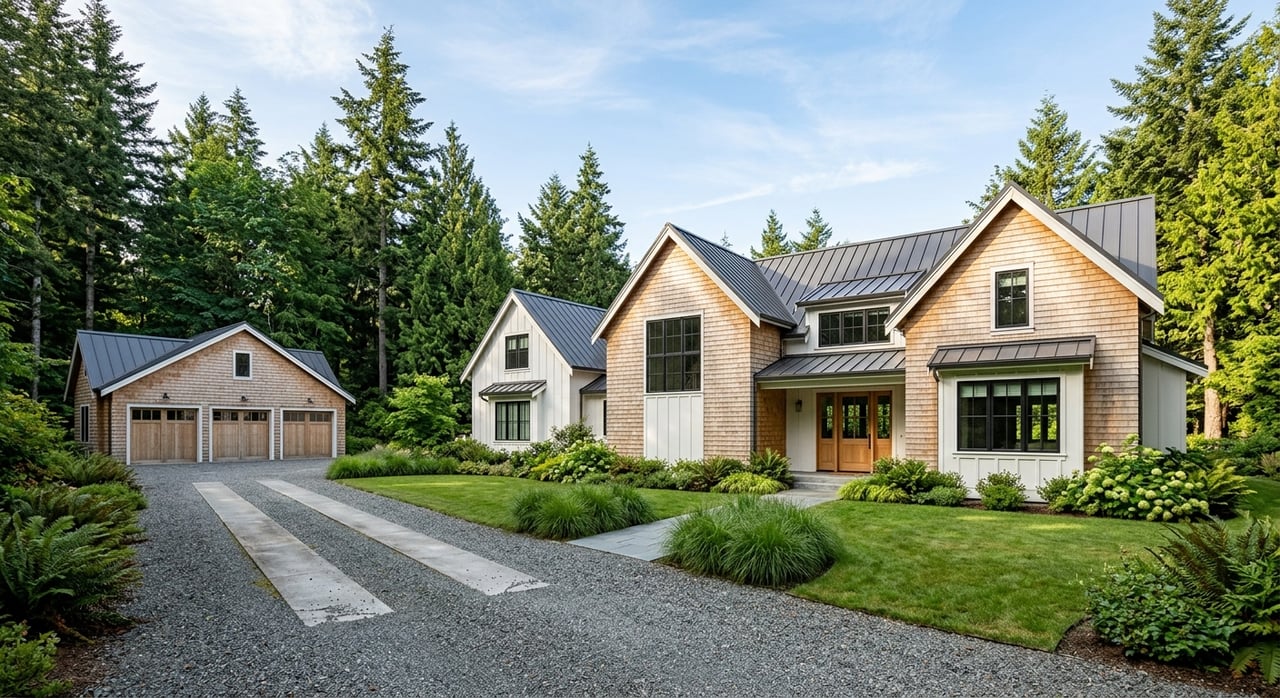
When many buyers picture a single-family home, they imagine a freehold detached property with a private yard and full control over the lot. That type of home often gives you the most flexibility for renovations and future changes, subject to city zoning and permit rules. In Langford, that can also connect to secondary suite guidance and the city’s small-scale multi-unit housing framework.
But not every detached-looking home is freehold. In BC, a single-family home can also be part of a bare land strata subdivision. In that setup, the home may look fully detached, but common roads, services, landscaping areas, or shared amenities can still fall under the strata corporation.
What a Townhome Usually Offers
Townhomes are often a middle-ground option for buyers who want more space than a typical condo but less hands-on exterior upkeep than a detached house. Statistics Canada classifies townhomes as row houses, and row houses made up 5.2% of Langford’s occupied dwellings in the 2021 census. That number does not capture every attached format buyers may consider, but it reinforces that ground-oriented attached housing is part of the local mix.
In many cases, a townhome comes with shared maintenance and shared governance. The strata corporation generally maintains common property and common assets, while owners contribute through strata fees. That can simplify some parts of homeownership, but it also means you need to understand the specific bylaws, budgets, and long-term repair planning for that development.
Single-Family vs Townhome at a Glance
| Factor | Single-Family Home | Townhome |
|---|---|---|
| Ownership structure | Often freehold, but can also be bare land strata | Often strata, but title must be verified |
| Exterior maintenance | Usually more owner responsibility | Often shared through strata, depending on documents |
| Monthly costs | No strata fees in a typical freehold setup | Usually strata fees, plus possible special levies |
| Renovation flexibility | Often more control, subject to zoning and permits | Often more rules, depending on bylaws and strata approval |
| Shared decision-making | Usually less shared governance | Usually more shared governance |
| Long-term planning | Owner manages most repair timing and budgeting | Shared budgeting through strata operating fund and reserve planning |
Maintenance Is a Major Deciding Factor
For many buyers, the right fit comes down to how much maintenance they want to manage themselves. With a typical freehold detached home, you are usually responsible for budgeting and coordinating repairs to the roof, siding, landscaping, driveway, and other exterior elements. That gives you control, but it also means more direct responsibility.
With a strata townhome, the strata corporation generally maintains common property and assets. That may include items like landscaping, roads, building envelopes, or utilities, depending on the strata plan and bylaws. Owners pay strata fees, and sometimes special levies, to cover those shared costs.
Why Strata Documents Matter So Much
Not all stratas work the same way. In BC, repair duties can be divided differently from one development to another, and bylaws may assign responsibility for some limited common property or even some items within the strata lot. For example, details around balconies, hot water tanks, or certain plumbing elements can vary.
That is why reviewing documents is so important before you buy. You want to know who handles roofs, siding, decks, balconies, landscaping, roads, and insurance, and whether there is any history of major repair costs or special levies.
Monthly Costs Need a Full Look
It is easy to compare only the purchase price, but that rarely gives you the full picture. A detached home may not have strata fees, but it may require more ongoing savings for maintenance and repairs. A townhome may have lower hands-on upkeep, but you will likely have monthly strata fees and shared financial obligations.
BC requires stratas to contribute at least 10% of the annual operating budget to the contingency reserve fund. Depreciation reports are also useful because they project major maintenance and replacement costs over a 30-year period. When you compare homes, it helps to look at the total monthly carrying cost, not just the mortgage payment.
Future Flexibility in Langford
If future potential matters to you, Langford is a city where local planning rules deserve close attention. The city’s planning framework includes formal pathways for duplex, multi-family, and small-lot residential applications. Its Small-Scale Multi-Unit Housing flow chart shows that some lots may be eligible for up to 3, 4, or 6 units depending on zoning, lot size, servicing, and transit-oriented area status.
That does not mean every property has the same options. It means buyers should look carefully at zoning, servicing, permit requirements, and secondary suite rules before making assumptions. If you are choosing a detached home because you hope for future suite or added-unit potential, the lot details matter just as much as the house itself.
Where Duplexes Fit Into the Decision
In Langford, duplexes are also worth keeping on your radar because they often sit between detached and townhome living. A duplex can offer some of the feel of a single-family property while still involving shared walls or a different ownership structure. The city’s planning process includes duplex applications, which shows they are part of the local housing landscape.
Just like detached homes and townhomes, the label alone does not tell you enough. A duplex can be governed very differently depending on whether it is freehold, strata-titled, or part of another ownership setup. If you are open to more than two categories, a duplex may be a smart comparison point.
Questions to Ask Before You Choose
Before you decide between a single-family home and a townhome in Langford, keep these questions front and center:
- Is the property freehold or strata?
- If it is strata, what do the strata plan and bylaws say?
- Who is responsible for the roof, siding, decks, roads, and landscaping?
- Are there strata fees, and what do they cover?
- Is there any special levy history or major repair work coming up?
- Is there a depreciation report available?
- What does the city allow on this lot under current zoning and Langford’s SSMUH framework?
- If the home is newer, is it registered under the 2-5-10 home warranty insurance program?
These questions can save you from expensive surprises later. They also help you compare homes based on how you actually want to live, not just how the property looks in photos.
Which Option Fits Your Lifestyle Best
A single-family home may be the better fit if you want more control, more privacy, and more room to shape the property over time. That can be especially appealing if you are focused on yard space, renovation freedom, or future suite possibilities. Just keep in mind that more control usually comes with more upkeep.
A townhome may make more sense if you want ground-oriented living with less direct exterior maintenance and a more structured ownership setup. For many buyers in Langford, that balance is appealing. You get practical space and shared upkeep, but you also need to be comfortable with strata rules, fees, and joint decision-making.
In the end, the better choice in Langford is usually less about the label and more about the details behind it. If you understand the title, monthly carrying costs, maintenance obligations, and long-term flexibility, you will be in a much stronger position to choose the home that truly fits your life.
If you want help comparing specific homes in Langford, Kash Burley can help you look past the listing photos and focus on the details that matter most.
FAQs
What is the difference between a freehold home and a strata home in Langford?
- A freehold home usually gives you more direct control over the property, while a strata home involves shared rules, shared costs, and common property responsibilities set out in strata documents.
Can a detached house in Langford still be part of a strata?
- Yes. In BC, a detached-looking home can be part of a bare land strata, so you should verify title instead of relying on appearance alone.
Are townhomes in Langford always strata properties?
- No. Many townhomes are strata-titled, but the province notes that you cannot confirm legal structure just by appearance, so the title and documents need to be checked.
What should you review before buying a townhome in Langford?
- Review the strata plan, bylaws, budget, contingency reserve fund information, depreciation report if available, insurance details, and any history of special levies or major repairs.
Does a single-family home in Langford allow more future flexibility?
- It can, but the answer depends on the property’s zoning, lot size, servicing, permit requirements, and whether it falls under Langford’s small-scale multi-unit housing pathways or secondary suite rules.
Why are duplexes relevant when comparing single-family homes and townhomes in Langford?
- Duplexes often sit between the two options in how they live and how they are governed, so they can be a useful comparison if you want a balance of space, maintenance, and ownership structure.